Sculpted ocean cliffs, timeless mountain villages, volcanic landscapes, and beaches running the gamut from fine golden sands to midnight black—we fell head over heels for Gran Canaria. Far from the well-trodden Caribbean all-inclusive circuit, this Canary Island checks every box for an easy, sun-drenched winter escape. But what genuinely caught us off guard was the sheer variety packed into such a compact island. Finding that sweet spot between laid-back downtime, cultural discoveries, and rugged outdoor adventures made our one-week road trip so memorable.
Even better news: Air Transat runs direct weekly flights straight from Montreal and Toronto starting December 2026.
How many days are enough for Gran Canaria?
One week is plenty! On paper, Gran Canaria might look small, but it punches far above its weight. You are in for a treat, but to make sure you do not miss the island’s best panoramas, we strongly suggest following our tried-and-tested route.
From the whitewashed alleys of Fataga to the windswept heights of Roque Nublo, and from the canals of Puerto de Mogán back to the historic streets of Las Palmas, here is our ultimate Gran Canaria itinerary. We hope you’ll enjoy it!
Day 1: Las Palmas
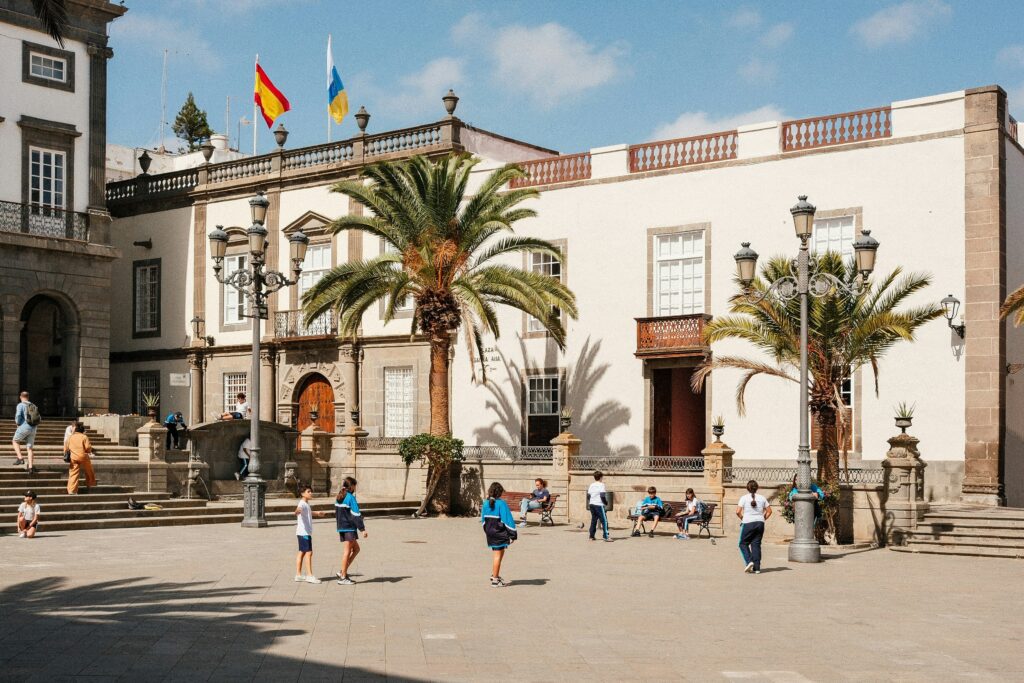
After a long flight and the inevitable time change, give yourself space to ease in. Starting your trip in the capital, Las Palmas, is the easiest way to take the pulse of the island.
Kick things off in Vegueta, the historic heart founded in the late 15th century. Plaza de Santa Ana sits at the center, surrounded by the twin-towered cathedral, handsome colonial facades, and the Casa de Colón. The latter is a great reminder of the Canaries’ pivotal role in early transatlantic crossings, but it is worth stepping inside just for the peaceful interior courtyards and ornate wooden balconies. If you want to dive deeper into the island’s indigenous roots, the nearby Museo Canario is well worth a visit. From there, cross over to Triana to take in its elegant modernist facades and bustling shopping streets.
By late afternoon, let the ocean air pull you toward Las Canteras Beach. The lively seaside promenade stretches for miles and makes the dreamiest setting for an evening stroll and your first dip in the Atlantic. Especially with its abundant marine life just a few metres from the shore!
- Good places to eat: Triciclo – a fantastic, lively terrace where we loved digging into classic papas arrugadas with mojo (and plenty of other creative dishes).
- Where to stay: Suites 1478 – a gorgeous, intimate boutique hotel tucked inside a historic mansion just steps from the cathedral.
Day 2: Las Palmas Hinterland
Two spots convinced us to spend our second day exploring the lush interior just outside Las Palmas: Arucas and Teror.
Arucas
First stop: Arucas, dominated by the imposing Church of San Juan Bautista. Do not let its medieval cathedral look fool you—masons built this masterpiece primarily in the 20th century. The dark volcanic stone set against the pastel townhouses around it is a sight to behold.
Arucas is also home to Arehucas rum, crafted right here since 1884. Touring the distillery—one of Europe’s oldest operational cellars—lets you explore historic oak barrel rooms and grasp just how vital sugarcane once was to the local economy. If you have time to spare, wander through the Jardín de la Marquesa, a tranquil 19th-century botanical garden.
As the road climbs higher into the hills, driving becomes an adventure in its own right. Keep your schedule flexible—you will want to pull over constantly for photos.
Teror
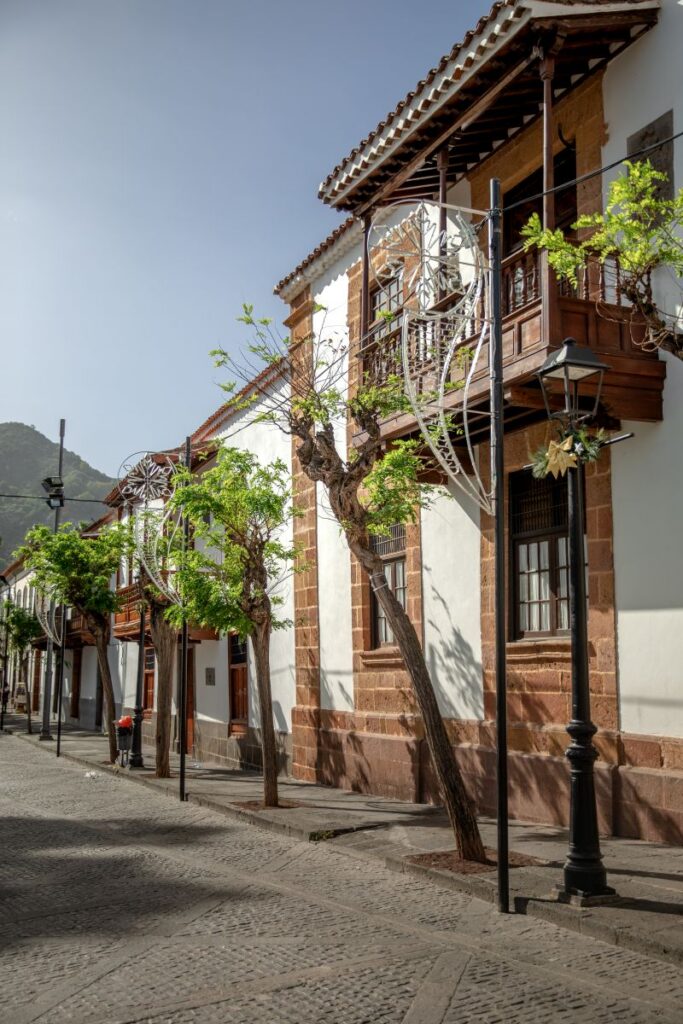
Next, make your way up to Teror, without question one of the prettiest spots in northern Gran Canaria. Calle Real de la Plaza is lined with historic homes boasting ornate wooden balconies, leading straight to the Basilica of Nuestra Señora del Pino, patron saint of the island. If you happen to visit on a Sunday, the street market fills the village with life, giving you the perfect excuse to taste local food—especially the famous spreadable chorizo de Teror. You have to try it at least once this week!
- Good places to eat: El Encuentro in Teror – an unpretentious, welcoming neighborhood gem serving honest Canarian flavors.
- Where to stay: We suggest driving back down to Las Palmas to avoid repacking your bags every single night, but you could easily book a cozy rural guesthouse around Teror if you want total peace and quiet.
Day 3: The Northwest Coast
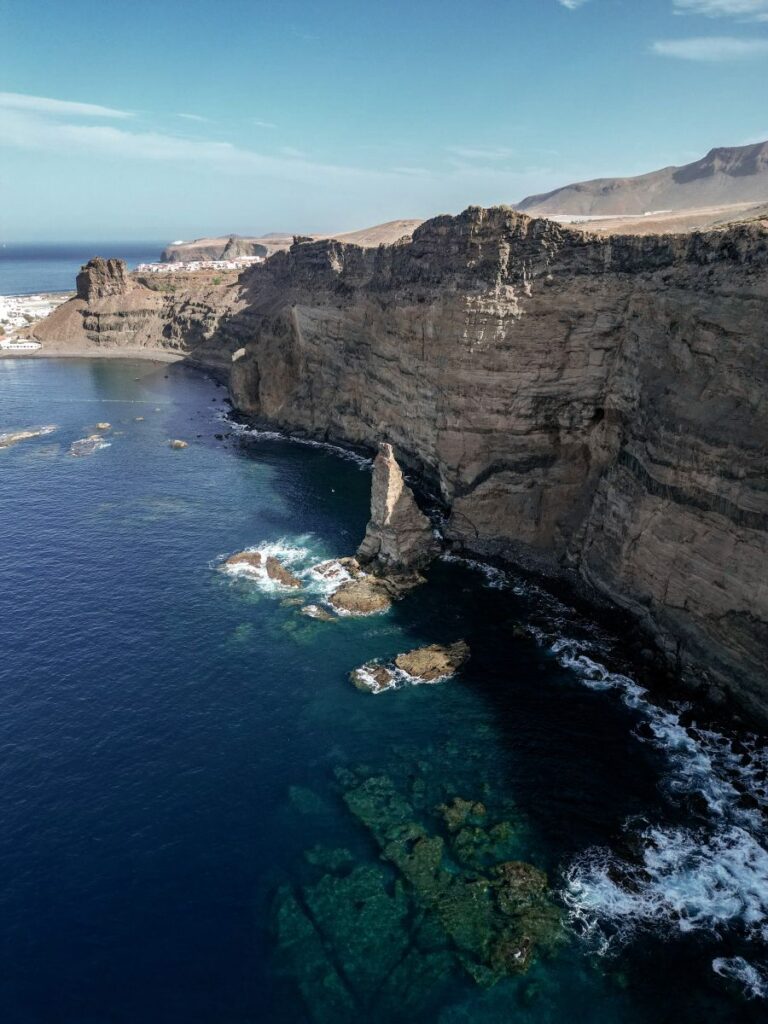
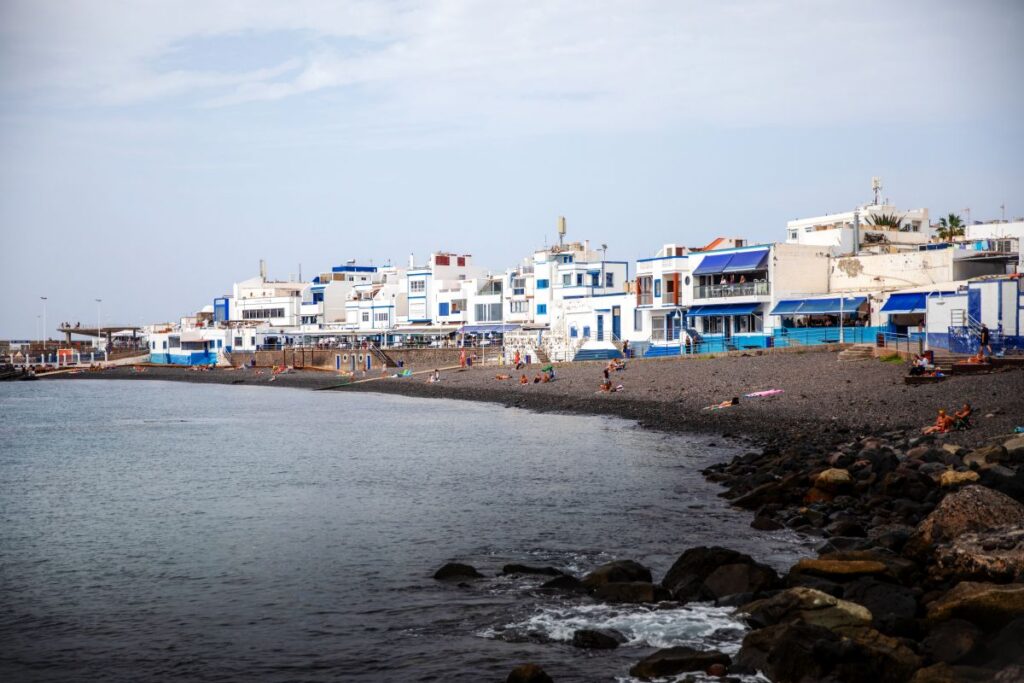
To head west, you have two choices: cruise along the coastal highway or hug the mountains through Moya. Take our word for it—the mountain route through Moya is infinitely more rewarding.
This northern part of Gran Canaria catches the trade winds, making it noticeably greener than the rest of the island. The easy loop trail through Los Tilos de Moya winds through one of the last surviving pockets of ancient laurel forest (laurisilva), a prehistoric subtropical woodland that once carpeted the archipelago. It is a lush, easy walk suited for everyone.
From there, drive over to Cenobio de Valerón, a sheer cliff face honeycomb-carved with hundreds of pre-Hispanic cave dwellings and grain silos that reveal how early islanders lived long before the Spanish conquest. If that glimpse into the past piques your interest, keep driving to Gáldar for the Cueva Pintada Museum, where you can explore an excavated indigenous village and rock art covered in geometric murals (book ahead!).
The north is also famous for its natural rock pools carved right out of the dark volcanic shore. They let you swim in calm, sheltered water while massive Atlantic waves crash just beyond the rocks. Our favorite spots:
- Roque Prieto
- Charco de Gáldar
- El Charco (right near Punta Sardina Lighthouse)
- Good places to eat: La Trastienda de Chago in Gáldar – a laid-back wine bar serving fantastic local cheeses and cured meats, as well as Restaurante Agáldar.
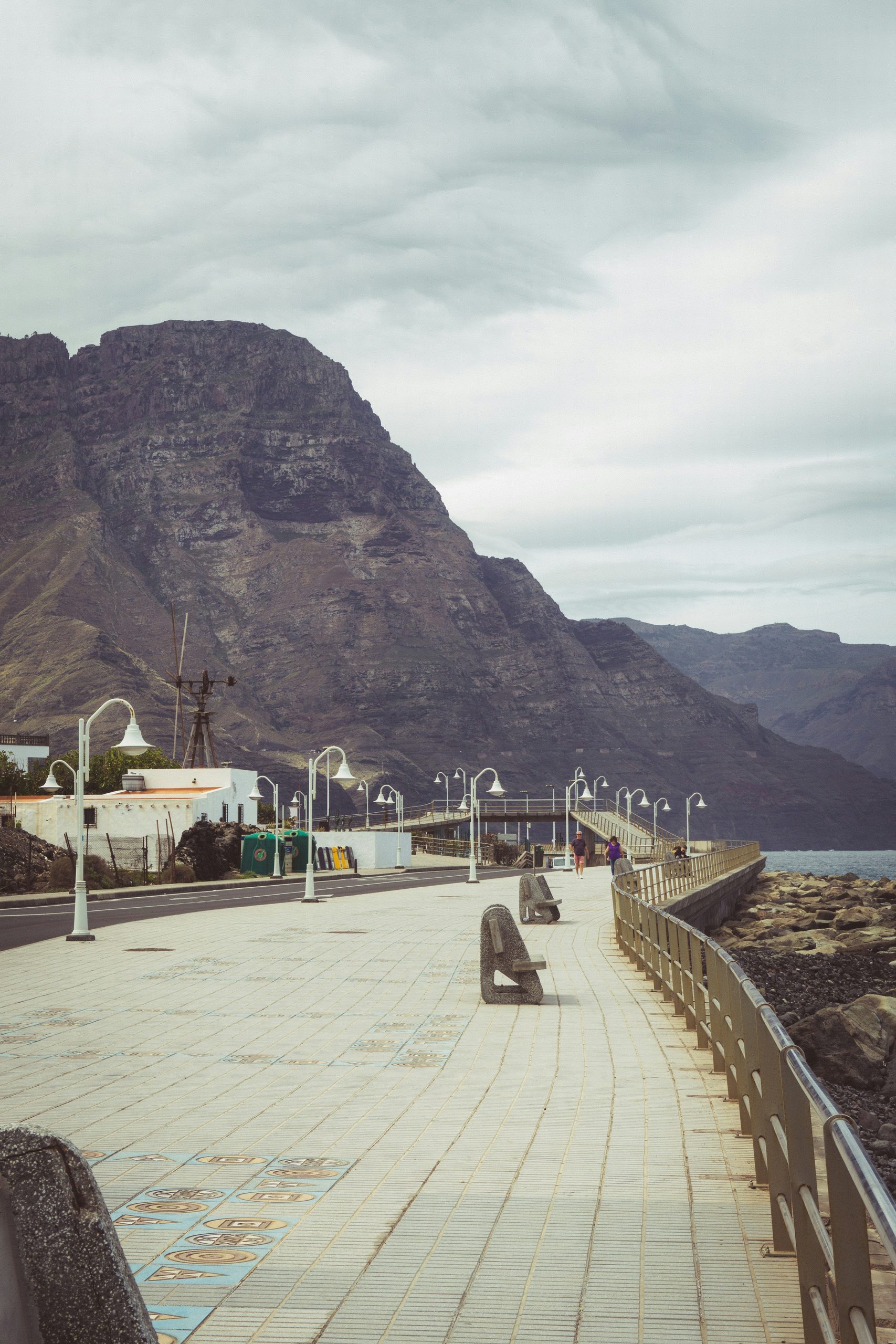
To cap off the afternoon, grab a perch in the small fishing village of Puerto de las Nieves and watch the sun sink behind the cliffs and the iconic Dedo de Dios sea stack.
- Where to stay (Coast): Redondo de Guayedra – an eco-lodge immersed in raw nature.
- Where to stay (Valley): Hotel Rural Las Longueras – a stunning historic country manor in the Agaete Valley.
- Good places to eat in Agaete: Casa Romantica Agaete, Calle Larga in Agaete for grilled meats or El Chozo in La Aldea de San Nicolás for fresh fish after your stop at Mirador del Balcón.
Day 4: Tejeda Mountains & Mirador del Balcón
La Aldea
Take your time strolling around Agaete before climbing into the peaks. Grab a café con leche on Plaza de la Constitución to soak in local village life, wander through the peaceful botanical paths of Huerto de las Flores, and drive up the Agaete Valley to spot Europe’s northernmost coffee plantations and tropical fruit trees.
More in the mood for the ocean? Stick around Puerto de las Nieves and kick back on volcanic black sand at Playa de Guayedra.
One of our absolute favorite things about Gran Canaria is its scenic drives, especially the route climbing toward Tejeda. From Agaete, take the GC-200 through Tamadaba Natural Park, then hop onto the GC-2 to trace the rugged western side of the island. (Road trip tip: the old cliffside section of the GC-200 between Agaete and El Risco remains permanently closed).
Make sure to take the detour to Mirador del Balcón. This glass-floored viewpoint hangs right over the edge of sheer cliffs plunging straight down into the Atlantic. The view is dramatic, dizzying, and worth every second of the detour.
The mountains
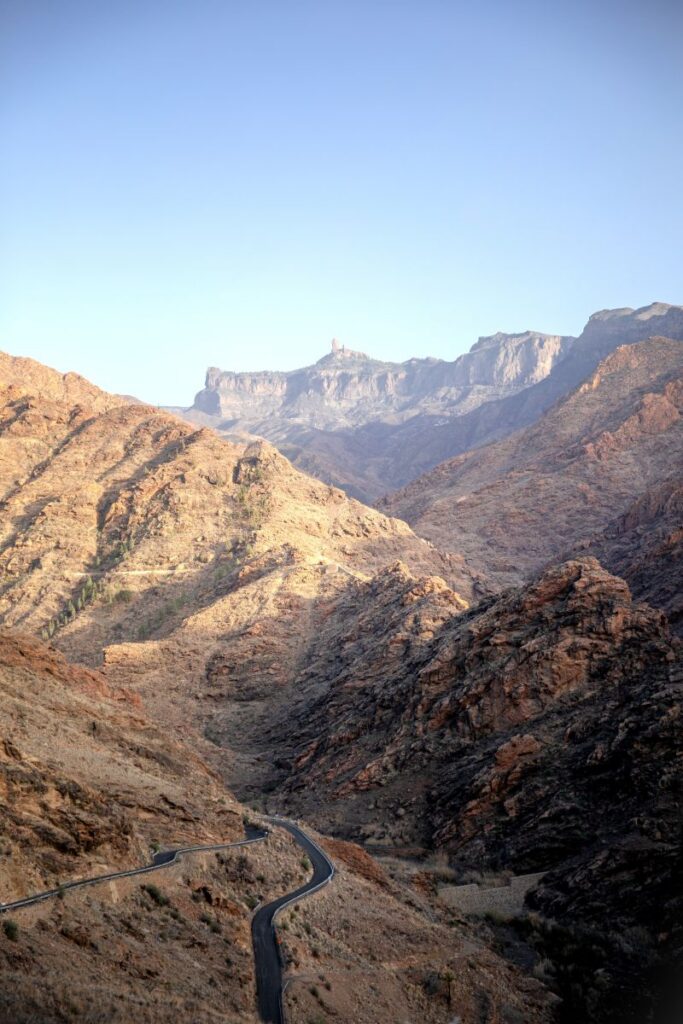
Loop back toward El Albercón to catch the GC-210. This is where the landscape transforms entirely: the road cuts deep into rugged, sun-drenched canyons that feel straight out of the American Southwest. It is an arid, untamed part of Gran Canaria that proves just how diverse this island really is. Drive past the Presa del Parralillo reservoir and follow the road up to Tejeda.
We chose Tejeda as our mountain base for a reason: part of the island is a certified UNESCO Starlight Reserve, and Tejeda’s high altitude, clear air, and minimal light pollution make stargazing here unforgettable.
- Good places to eat (Lunch): Calle Larga in Agaete for grilled meats, or El Chozo in La Aldea de San Nicolás for fresh fish after your stop at Mirador del Balcón.
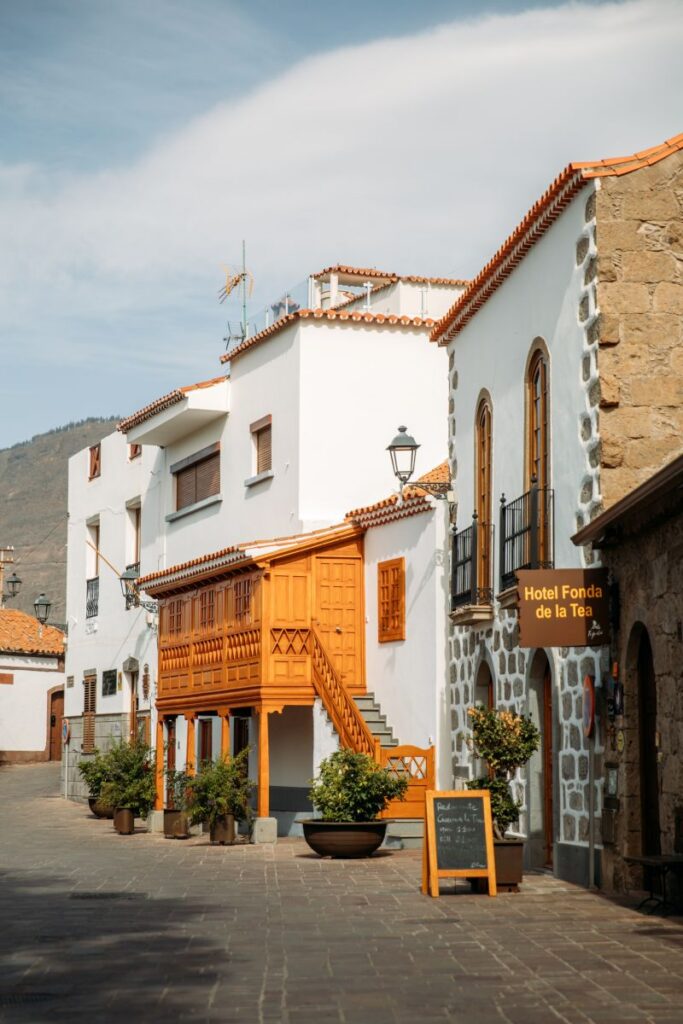
- Where to stay: Hotel Rural Fonda de la Tea – charming rooms right in the center of Tejeda with an exceptional restaurant a short walk away.
- Where to stay if you’re after luxury: Parador de Cruz de Tejeda – book this for its jaw-dropping mountain views, spa, and hydrotherapy pool overlooking the valley.
Day 5: Around Roque Nublo
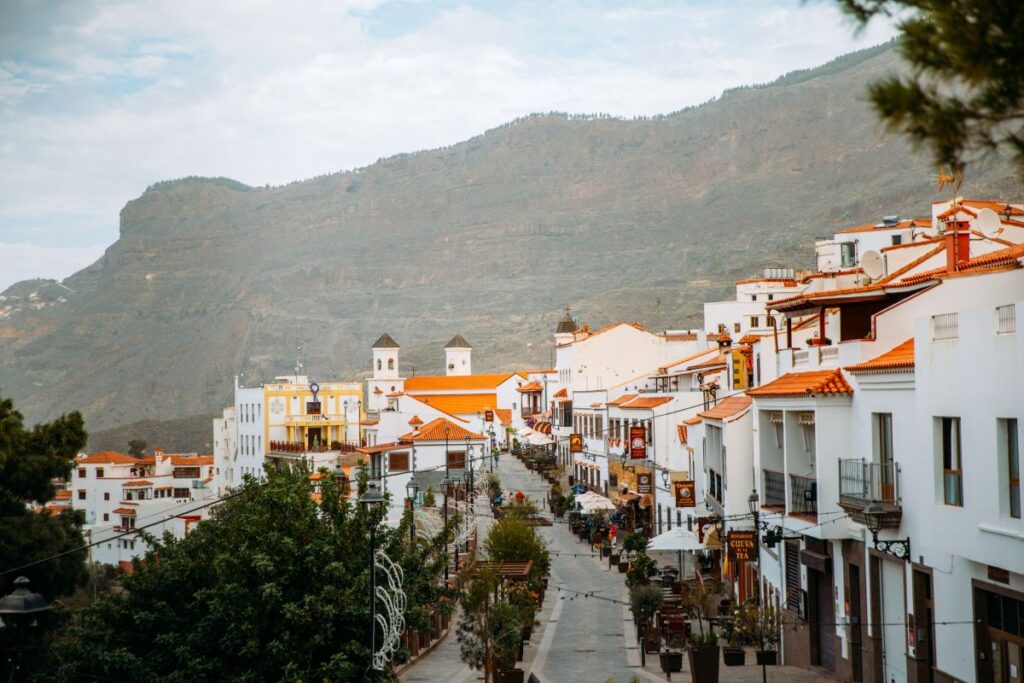
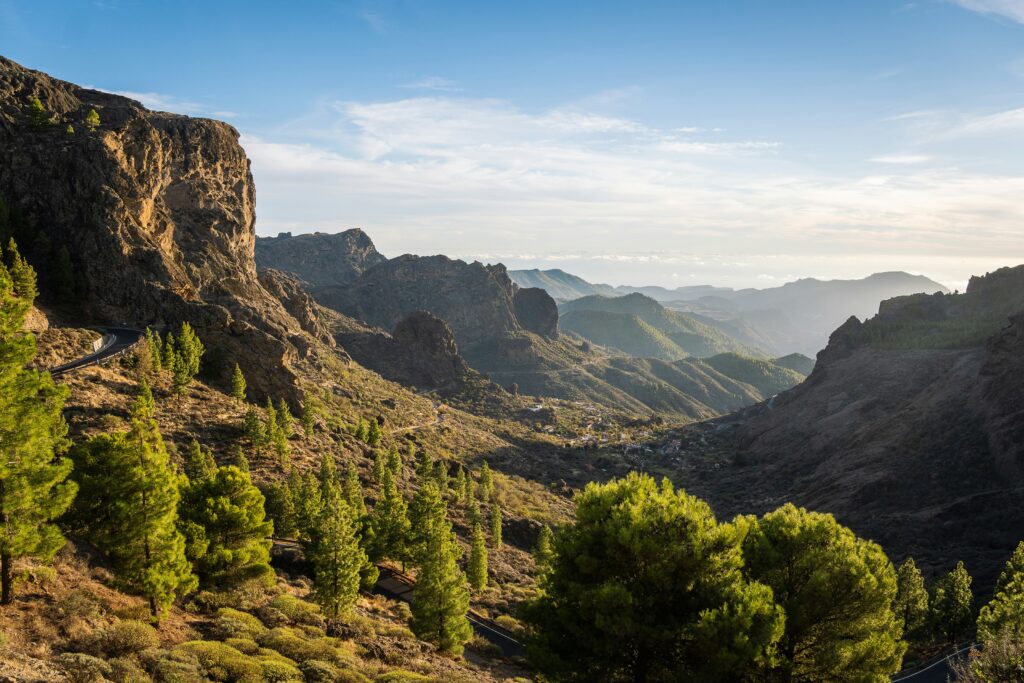
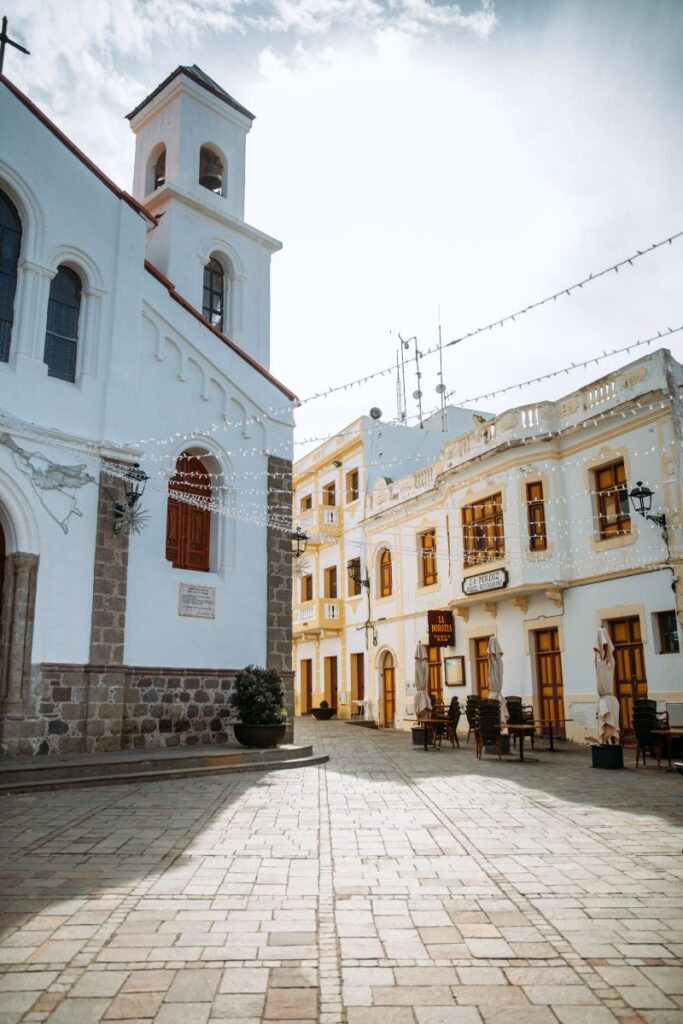
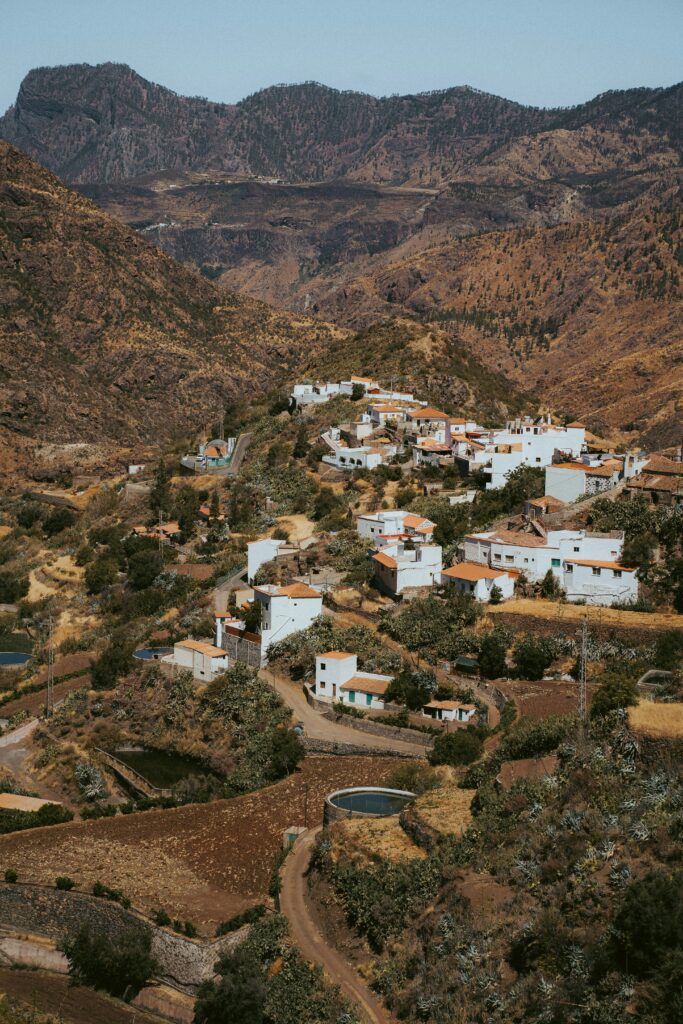
Soak in Tejeda’s sunrise, calm morning air and exceptional setting. The village perches like a balcony overlooking the island’s volcanic core—it was hands down our biggest crush on Gran Canaria.
Come early afternoon, make your way up to Pico de las Nieves, the island’s highest summit (1,949 m). You do not even need to lace up hiking boots: a paved road leads straight to the viewpoint at Pico de los Pozos.
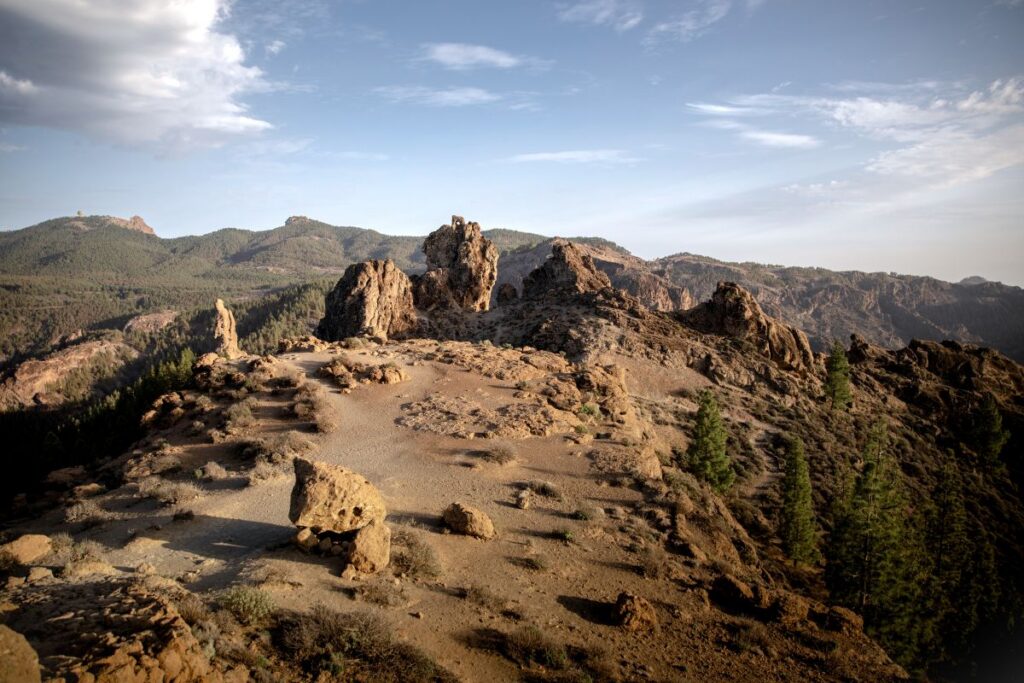
From there, head toward Roque Nublo—and pull over for as many photos as you like along the way. Sitting at 1,813 meters, this ancient basalt rock is the undisputed symbol of central Gran Canaria. Pine forests, volcanic crags, and sweeping views stretch all the way across the ocean to Mount El Teide on neighboring Tenerife.
Seeing it from the road is impressive, but nothing beats hiking out to the base of the rock itself. The most accessible trail starts from the La Goleta parking area (around 3 km round-trip with 187 m of elevation gain).
To protect the site, getting up there now requires a free advance reservation on the Reservas Roque Nublo website. Access is capped at 60 visitors per hour between 9:00 AM and 5:00 PM, and shuttle buses run every 30 minutes from downtown Tejeda and Cruz de los Llanos.
- Local treat: Try bienmesabe, an indulgent sweet cream made from local almonds and honey—a Tejeda specialty!
- Good places to eat: Restaurante Fonda de la Tea for hearty, generous local food in a cozy evening setting. But honestly, all restaurants in Tejeda village are great options.
Day 6: Southbound via Fataga and Dunas de Maspalomas
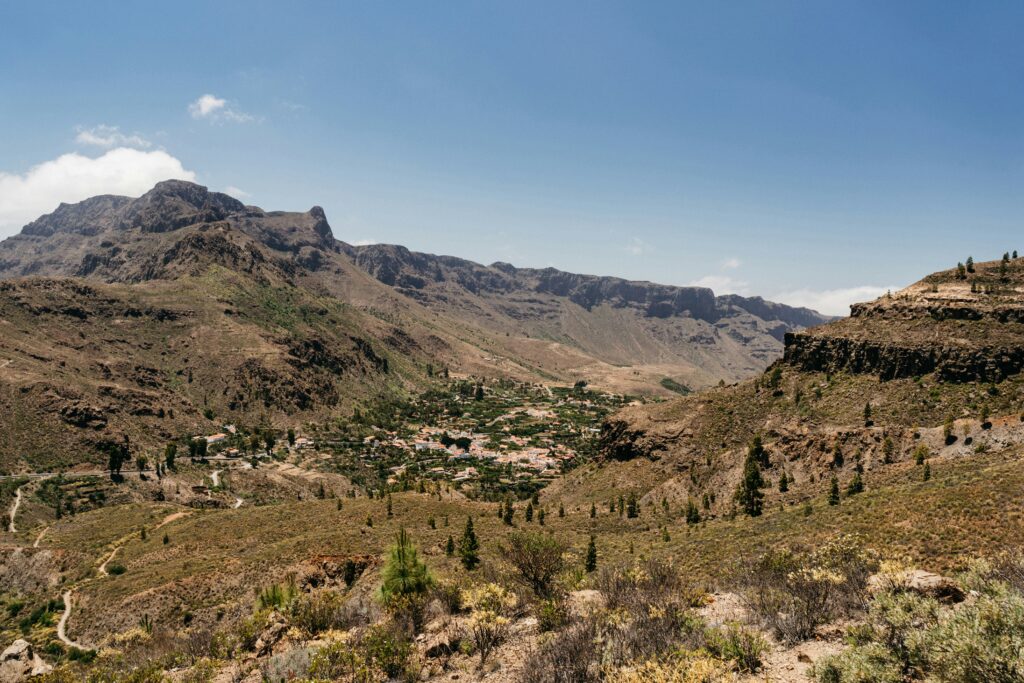
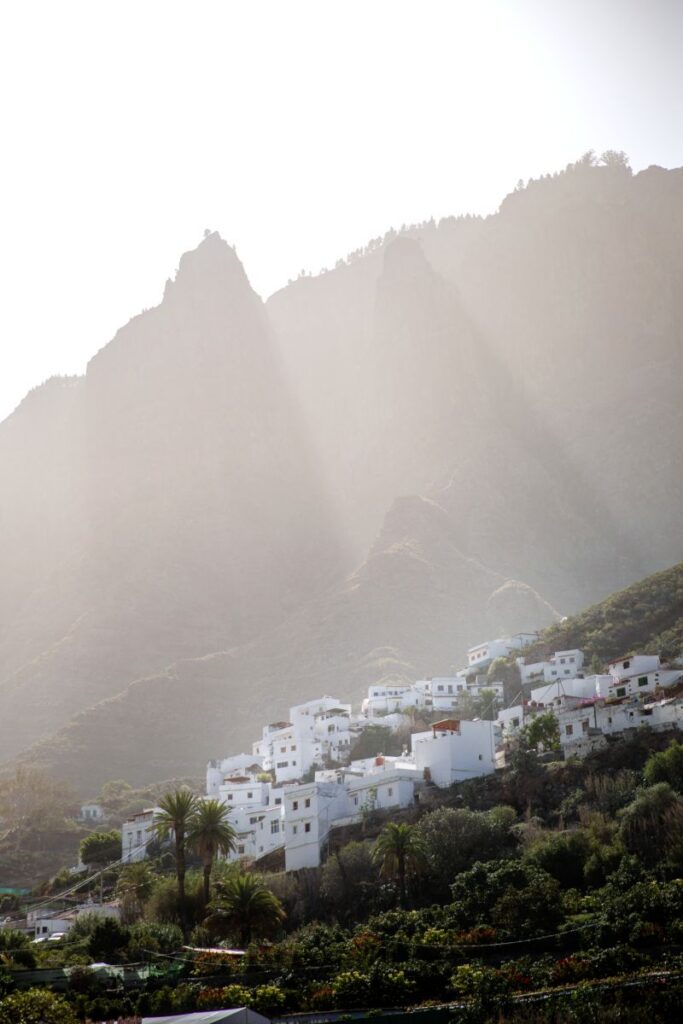
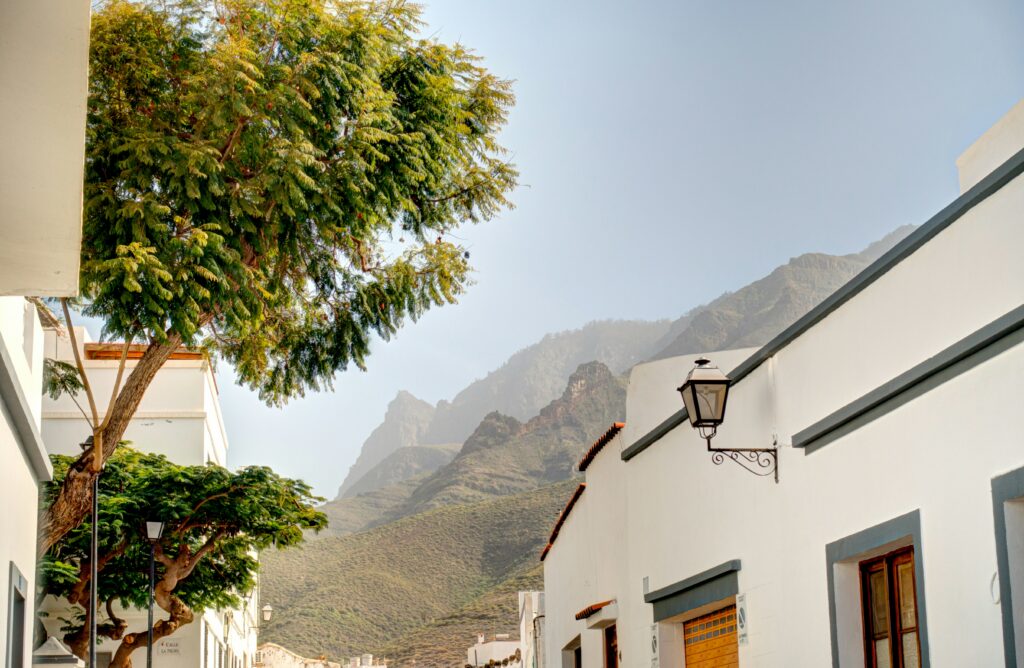
Get back on the GC-60 and steer south. The landscape slowly opens up as the road drops into the valley toward the mountain village of Fataga. Its whitewashed houses framed by palm trees, olive groves, and red rock cliffs make a lovely stop. It only takes a few minutes to walk the alleys, but the setting is so peaceful you will want to linger for lunch.
By afternoon, roll into Maspalomas, the bustling resort hub of the south. It is definitely the most tourist-heavy part of Gran Canaria, but it also boasts some of the calmest, warmest waters for swimming.
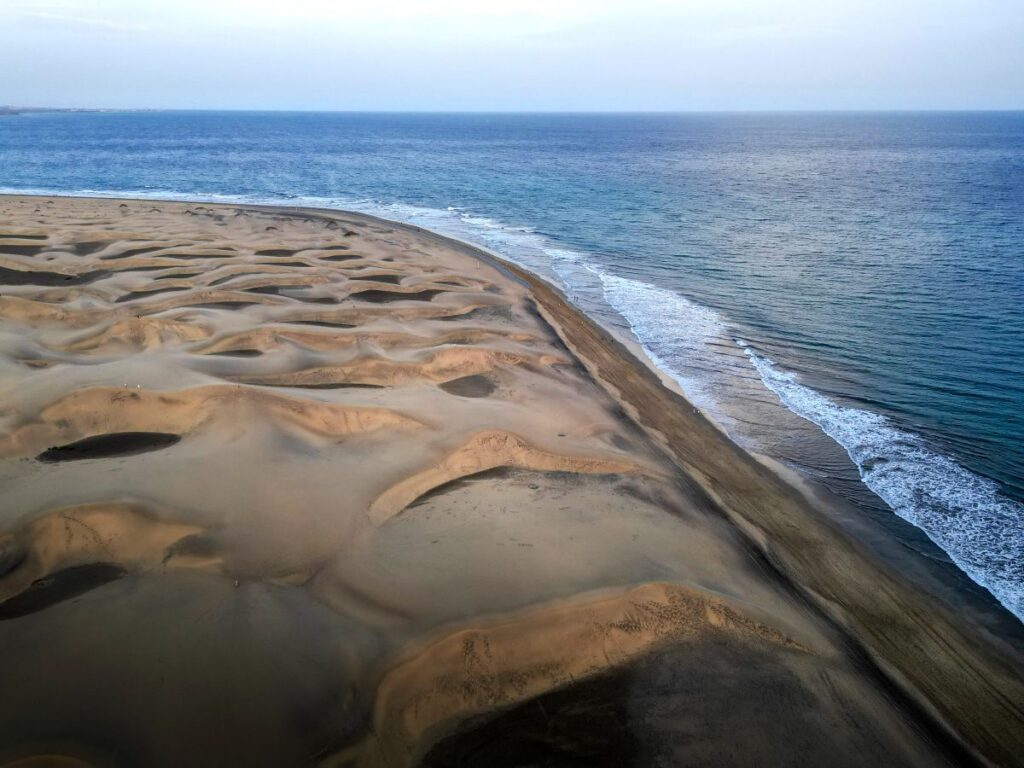
The real showstopper is the Dunes of Maspalomas, a protected 400-hectare reserve that rolls for miles right into the ocean between Playa del Inglés and Maspalomas Beach. Walk past the crowded access points and wander deep into the sand dunes to catch the sunset (just be sure to stick to the designated open zones to protect the delicate environment).
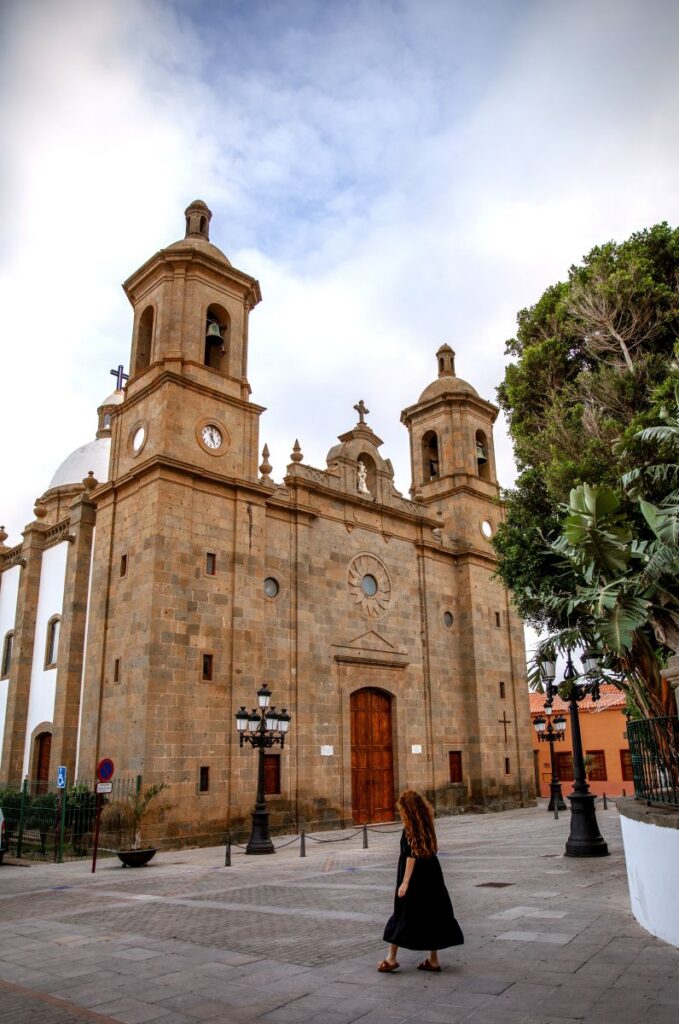
If you have free time, try to squeeze in a few hours in Agüimes. It’s one of the oldest villages on the island. The center is filled with warm ochre facades, quiet stone squares, and the domed Church of San Sebastián, with a lively dining scene.
- Good places to eat: Restaurante El Albaricoque in Fataga for a vibrant outdoor lunch on the terrace.
- Where to stay: Seaside Palm Beach if you want luxury right by the beach in Maspalomas.
Day 7: Mogán & the southern coast
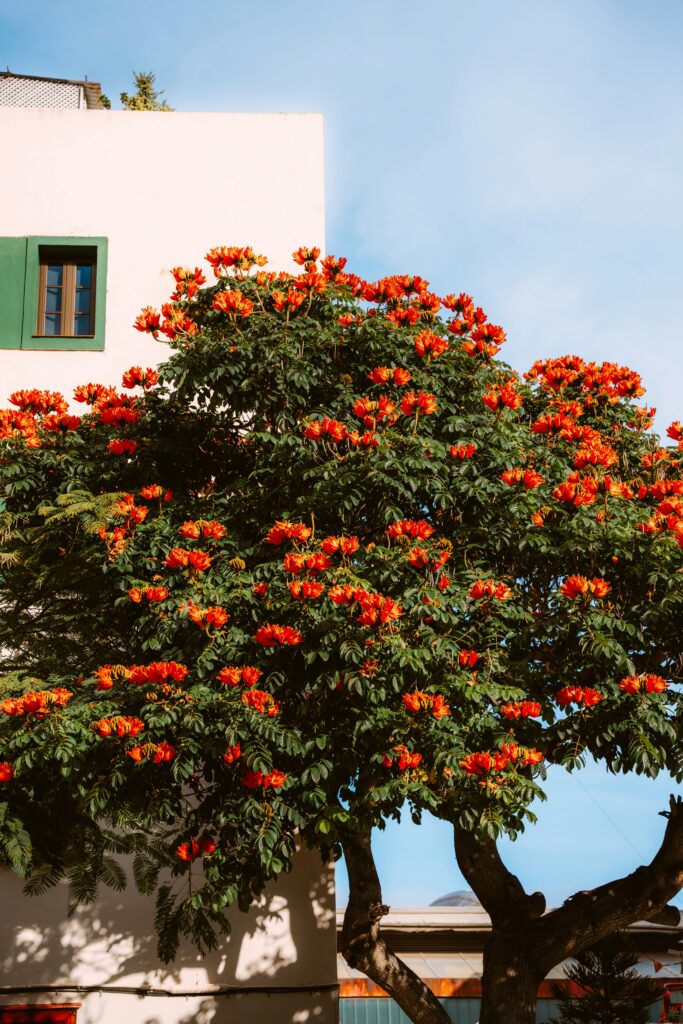
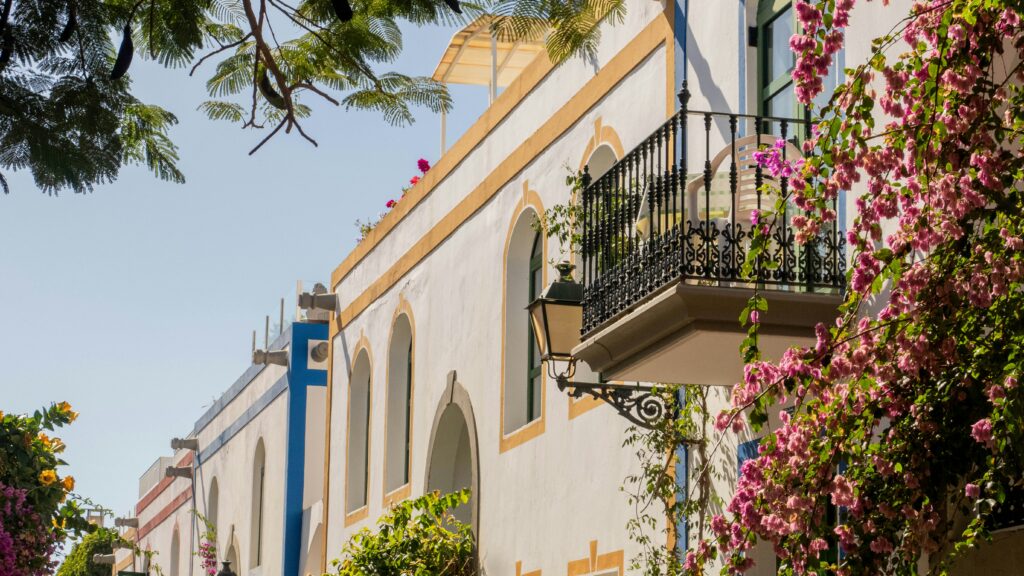
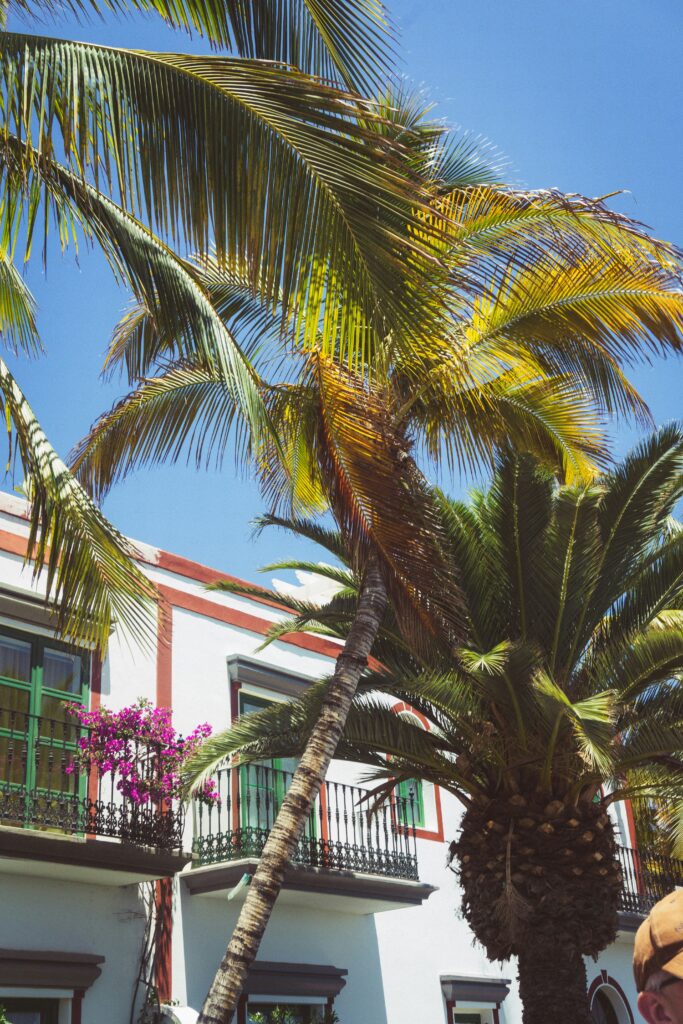
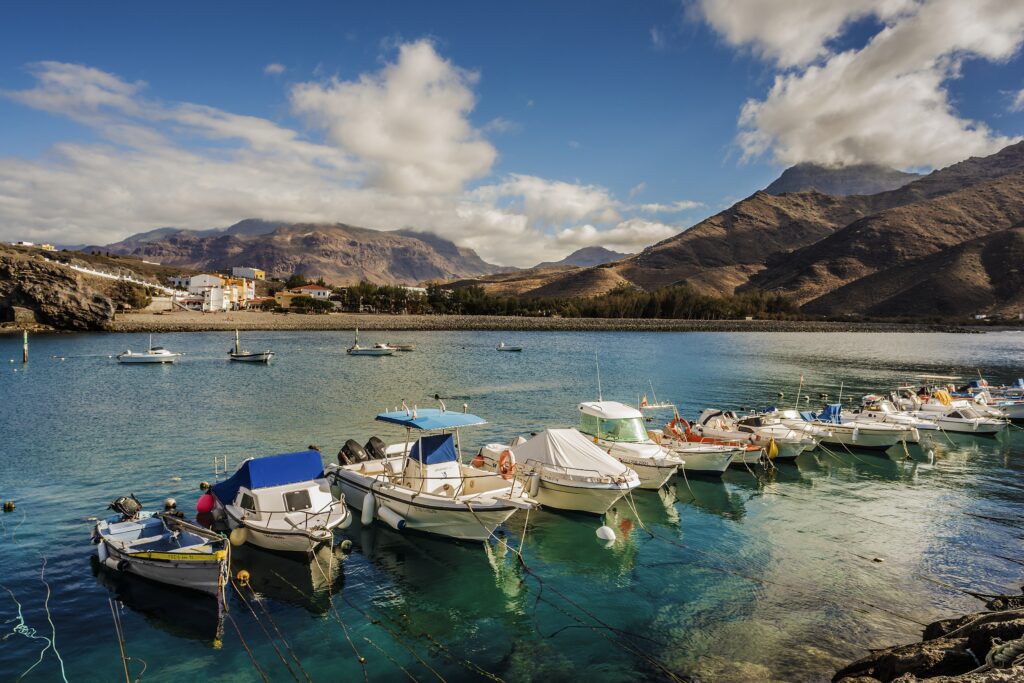
Use your final day to slow down after days of winding mountain drives. Puerto de Mogán is easily the prettiest seaside spot in southern Gran Canaria. Its whitewashed cottages, bright bougainvillea, and flower-filled alleys surround a very photogenic marina. If you are there on a Friday, a massive open-air street market takes over the village—perfect for picking up local souvenirs.
Spend the rest of the day lounging on the beach, snorkeling, or booking a boat tour to spot pilot whales and dolphins. The waters off the southwest coast are home to several resident pods, making this one of the best spots in Europe to see them year-round.
A truly perfect way to wrap up a week in Gran Canaria!
- Where to stay: Hotel Cordial Mogán Playa.
Gran Canaria itinerary: our tested and tried pro tips
Can you visit Gran Canaria without a car?
Renting a car at LPA airport gives you the freedom to reach remote trails and small coastal hamlets.
Do not judge travel times purely by distance: narrow roads and winding switchbacks throughout the interior turn a 30-kilometer drive into an hour-long journey. Modern multi-lane highways connect the eastern and southern coastlines, while the center and western side rely on steep mountain passes.
Is Gran Canaria expensive?
All of the Canary Islands use the Euro (€). Gran Canaria in particular offers remarkable value: you can sit down for a generous dinner of fresh seafood, local cheeses, and Canarian wine for under €25 per person.
When is the best time to visit?
Gran Canaria offers great weather year-round, with peak season running through winter. Remember that weather shifts quickly across microclimates: warm sunshine on the southern beaches can give way to cool breezes in the mountains, so pack a light sweater and windbreaker. Book car rentals, popular restaurants, and hiking permits early when traveling during winter holidays.


Fly to and from Europe with the World’s Best
It’s no wonder Air Transat has been named the World’s Best Leisure Airline by Skytrax eight times. We’ve perfected the “little things” so you can focus on the journey ahead… And it’s always about the little things, isn’t it?
- Your carry-on is always included.
- Enjoy two complimentary meal services paired with your choice of fine red or white wine.
- Experience the warmth of our signature attentive and efficient service.
- Relax in the spacious, state-of-the-art cabins of our modern Airbus fleet.
- Our specialized ambient mood lighting syncs with your body clock to help beat jet lag before you even land.